Introduction
Among fabrication and manufacturing, welding has become one of the core processes. Not many factories are able to correctly measure their welding productivity and work out methods for improvement. A productivity audit is not just about tracking arc-on time; it involves a systematic review of all factors of welding operations that can unmask hidden inefficiencies. If done properly, it can dramatically cut costs, improve quality, and enhance throughput.
What most factories really ignore in these audits are the real performance drivers beyond superficial metrics, such as true output, quality losses, downtime, and workflow inefficiencies.
What Is a Welding Productivity Audit?
A welding productivity audit is an examination of how welding activities are performed in an industrial setting. It would usually involve:
• Equipment and Process Usage
• Time spent on welding compared to preparation, inspection, and cleanup
• Operator performance
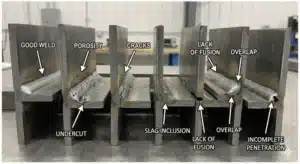
• Quality and rework rates
• Workflow and material logistics
The common myth is that productivity is equivalent to “busy welders.” Yet, being “busy” is absolutely no guarantee that a welder is being productive, just as downtime is no guarantee that he/she is unproductive! In semi-automatic environments, for instance, “arc on time is a mere 10 to 12 percent”.
Why Standard Metrics Often Mislead
1. Arc-On Time Alone Is Not Enough
Therefore, many operations are focused on the arc-on time since it’s easy to calculate; the arc-on time simply indicates how long the arc burns.
• Arcing time may be high in a situation where constant reworking of the result may be needed.
• It overlooks preparation, inspection, and cleanup activities, which could substantially influence the system’s overall throughput.
Therefore, true productivity metrics should comprise:
• Deposition rate (kg/hour of filler material actually added)
• Parts or welds completed per shift
• First-pass yield (mechanical welds that meet specs without re
• Quality defect and scrap percentages
2. Ignoring Hidden Costs
These factory businesses usually only consider the direct expense of the welders or the material they employ, while ignoring other various expenses, which include:
• Rework due to poor quality
• Machine idle time
• Setup and changeover losses
– Excessive travel, layout inefficiencies
This limited cost viewpoint belies the true economic effect of the inherently inefficient welding process.
Common Productivity Losses That Often Remain Unnoticed
1. The Shop Layout
Welders and materials that have to travel long distances waste their time and increase their idle times. Badly designed workflows can add substantial non-value activities to a business’s daily activities.
2. Bottlenecks in Workflow
Even slight delays in handoffs or equipment setups can cause major problems with regard to productivity.
3. Outdated Performance Tracking
Factories would often not have a clue about the efficiency of the overall operations without appropriate tools to measure and track. Today, welding softwares are designed to measure parameters like voltage consistency and arc times with deviations.
4. Absence of Continuous Improvement CultureIn the absence of a Continuous Improvement and LEAN Manufacturing philosophy and techniques like Kaizen and Takt Time Analysis, any highly effective process structure will plateau eventually.
Key Metrics to Include in a Productivity Audit
A more exhaustive audit on overall welding productivity can encompass:
| Metric | Why It Matters |
| Arc-On Time | Indicates active welding time, not full productivity |
| Deposition Rate (kg/hr) | Measures actual weld metal added over time |
| First-Pass Yield (%) | Shows welds meeting specs without rework |
| Rework & Scrap Rates (%) | Reflects quality losses affecting throughput |
| Equipment Downtime (%) | Measures lost production due to machine issues |
| Setup & Changeover Time | Highlights non-value work reducing output |
| Consumable Utilization (%) | Tracks efficiency of resources used |
The use of the above measures helps gain a multi-dimensional view of the performance, rather than making assumptions.
The Role of Technology in Modern Audits
Emerging technologies are transforming welding productivity audits:
1. Real Time Monitoring
Internet-of-Things sensors and welding software monitor the voltage, current, and idle time of an electric welding process and alert operators to inefficiency in real time.
2. Data Analytics
Historical and real-time data analytics can actually help managers identify various trends and root causes of reduced productivity—far beyond what can practically be tracked.
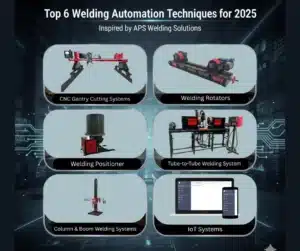
3. Automation & Robotics
- Automated welding systems are able to greatly enhance productivity in the following ways:
- Continuous 24/7 operation
• Fewer defects, less rework
• Higher consistent output compared to manual welding Case studies of robotic welding implementations from major companies indicate improvements such as 53% increase in daily output, reduced defect rates by 79%, and the development of finished goods.
What Most Factories Ignore in Audits
Here are the most common places where this is likely to be overlooked:
1. Total Process Time
Audits mostly involve only active welding. What is overlooked is:
• set up time
• Joint preparation
• Inspection
• Clean up
These can be a big part of a worker’s shift.
2. Losses Due to Quality
Defects and rework can silently eat into productivity, even when nominal outputs appear acceptable.
3. Motion and Material Flow Waste
Poor layout, avoidable motion, and inadequately controlled material feeds waste time—and are seldom recorded in charts and audits.
4. Utilization of Digital Data
Most factories collect data, but very few manage to identify and transform the data into actionable intelligence for enabling the process of CI.
Steps of a Practical Audit
A practical audit to judge welding productivity should follow these steps:
1. Baseline Data Collection – Measure performance against a number of different parameters.
2. Workflow Mapping – Documenting each process from setting up to inspection.
3. Identify Non-Value-Added Activities – Use Lean Principle to Eliminate Waste.
4. Analyze Quality Losses – Compare first pass yield and reworks.
5. Technology Assessment – Check if real-time monitoring tools provide visibility gaps fillers.
6. Action Plan Development – establishing priorities using ROI justification.
Conclusion
Audits of welding productivity are much more valuable when they extend past the measurement of arc time and assumptions. The plants that are failing to measure the holistic or behind-the-scenes variables such as the impact on quality, time, workflow, and digital analytics are the ones missing the boat.
Through the expansion of current audit practices to include real output measures, as well as continuous improvement tools and technology, manufacturing firms can greatly enhance the level of productiveness of the welding operation.