1. What Is Oxyacetylene Cutting?
Metal cutting is an indispensable operation for heavy fabrication, ship building, steel manufacturing, construction, automobile manufacturing, and many other industries. An appropriate choice of technology may positively influence productivity, quality of cutting, cost of operations, and production efficiency in general.
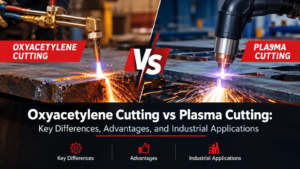
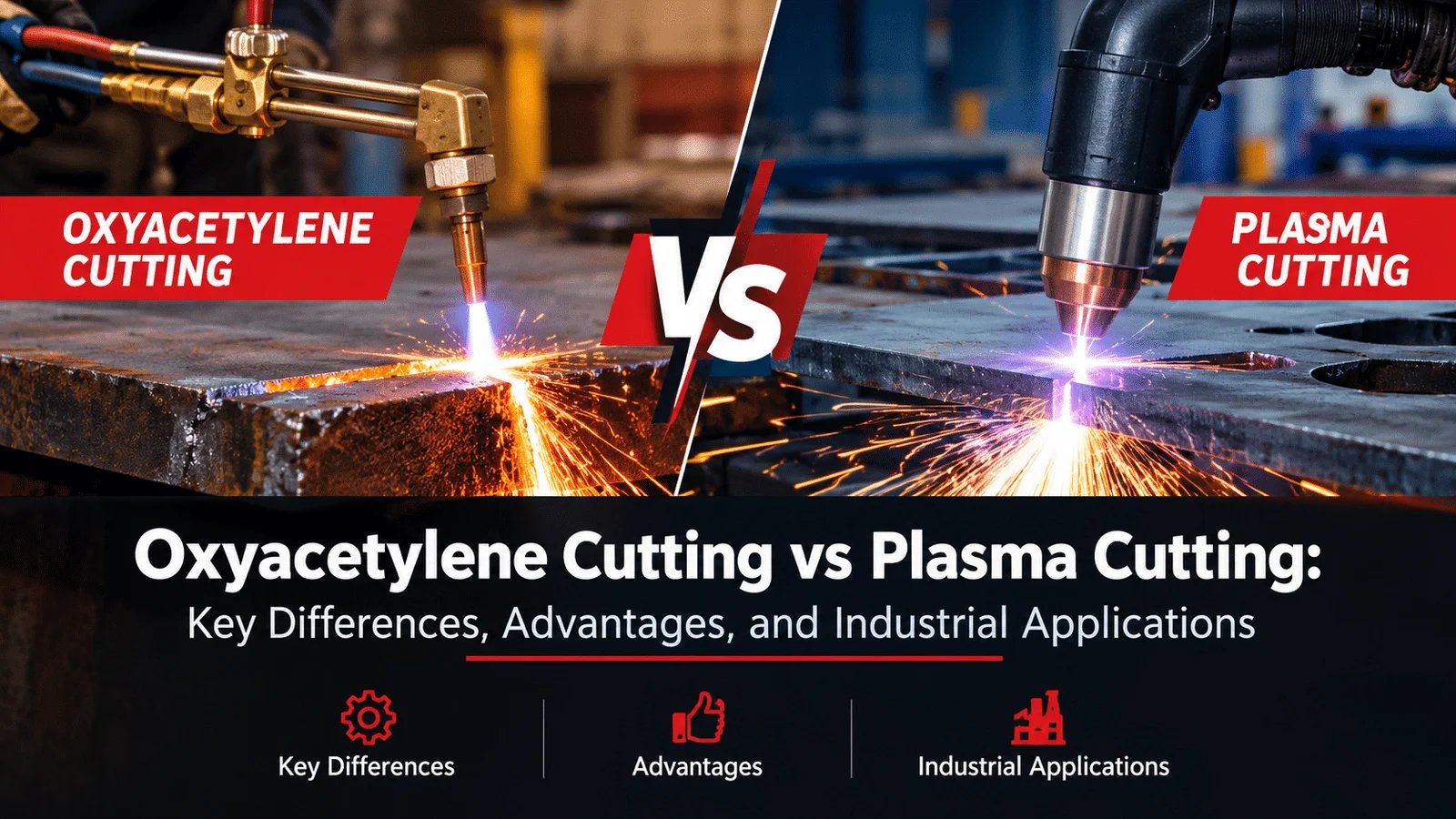
There are two popular thermal cutting technologies, namely oxyacetylene cutting and plasma cutting. While these methods are both designed for metal cutting, there is a number of differences in their operation and application.
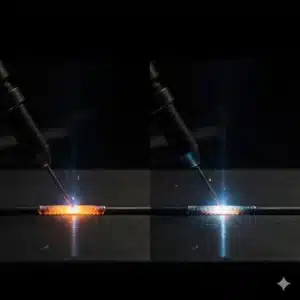
The former employs oxygen and acetylene gases in order to produce high temperature flame and heat up the metal so that the oxygen can oxidize and remove the metal. The latter uses a high temperature plasma arc that is electrically conductive and melts the metal and removes the molten material by high velocity gas flow.
Thus, which one is more suitable for industrial applications?
It all depends on the type of metal, thickness of material, cutting speed, edge quality, production volumes, and budget. This guide will tell you about the main difference between oxyacetylene cutting and plasma cutting.
How Does Oxyacetylene Cutting Work?
The oxyacetylene cutting process generally involves the following steps:
- Preheating: A mixture of oxygen and acetylene produces a flame that heats the metal to the required ignition temperature.
- Oxygen application: A high-pressure oxygen jet is directed onto the heated surface.
- Oxidation: The oxygen reacts with the hot iron, forming iron oxide.
- Slag removal: The oxygen jet blows away the molten oxide and other cutting residues.
- Cut completion: The torch moves along the intended cutting path to separate the material.
Advantages of Oxyacetylene Cutting
- Useful for thick metal plates: Oxy-fuel cutting is best suited for cutting thick carbon steels and structural metals.
- Inexpensive equipment: The oxy-fuel cutting equipment will cost less than an industrial plasma cutter.
- Portability of the equipment: The oxy-fuel cutting equipment can be moved from one location to another for fabrication and construction purposes.
- No electric arc for cutting: The cutting process doesn’t need an electric arc for cutting but the equipment may still use electricity.
- Used in heavy fabrication: It is widely used for cutting, disassembly, repairing, and scrapping of structural steels.
Limitations of Oxyacetylene Cutting
- It is mostly recommended for ferrous metals that easily undergo oxidation, including carbon and low alloy steels.
- It is normally not used to cut aluminum and stainless steel through the normal process of iron oxidation.
- The preheating process makes it slower compared to plasma cutting in most thin and medium thickness steels.
- Heat Affected Zone is quite large, depending on the thickness of the material being cut.
- Quality of edges and accuracy is normally inferior to that obtained through plasma cutting.
2. What Is Plasma Cutting?
Plasma cutting is a thermal method of metal cutting that uses the plasma arc to melt an electrically conductive metal.
In plasma cutting machine, there is an electric arc formed between the electrode and the metal either directly or through a pilot arc arrangement. Plasma is created when the gas passing through the torch becomes ionized by heat. The plasma jet becomes highly heated to melt the metal and remove the molten metal.
Plasma cutting is very common in industries because of its speed, flexibility, and capability of cutting various electrically conductive metals.
How Does Plasma Cutting Work?
The plasma cutting process typically follows these steps:
- Generation of arc: The cutting system creates an electrical arc through the torch and starting arrangement.
- Ionization of gases: Gases when passed through the torch get ionized, creating plasma.
- Melting of metals: The powerful stream of plasma melts the metal along the cut line.
- Ejection of molten metal: The strong stream of gas blows away the molten metal through the cut.
- Movement of torch: The torch either moves manually or by mechanical means to create the desired shape.
Advantages of Plasma Cutting
- Fast cutting rate: The process allows fast cutting of thin and thick sheets, resulting in increased productivity.
- Compatibility with various materials: It cuts conductive metals such as mild steel, stainless steel, and aluminum.
- High-quality cutting results: With appropriate plasma machines, it offers clean and accurate cutting.
- Cutting of complicated profiles: This type of cutting works well for brackets, flanges, machine parts, and complicated profiles.
- Automatability: Plasma machines can work in conjunction with CNC tables and mechanical cutting machines.
- Low need for preheating: The process involves less preheating than oxy-acetylene processes do.
Limitations of Plasma Cutting
- Plasma cutting needs proper electrical energy supply along with proper torch arrangement.
- Consumables like electrodes, nozzles, and shields have to be examined and replaced when needed.
- The cost of investment is relatively high compared to oxy-acetylene cutters.
- Compressed air and other gases might be needed, depending on the type of plasma cutter.
- For very thick sheets of steel, the use of oxy-acetylene cutters is more economical depending upon the quality and output needed from the machine.
- Plasma cutting efficiency depends upon the capacity of the power supply, quality of gas, consumables, torch height, and the cutting parameters.
3. Oxyacetylene Cutting vs Plasma Cutting: Key Differences
The following table highlights the major differences between the two cutting processes.
| Comparison Factor | Oxyacetylene Cutting | Plasma Cutting |
| Working principle | Flame heating followed by oxygen-driven oxidation | Electrical arc creates plasma that melts metal |
| Main energy source | Fuel gas and oxygen | Electrical energy |
| Material compatibility | Primarily carbon and low-alloy steel | Electrically conductive metals, including steel, stainless steel, and aluminium |
| Thin-sheet cutting | Often less productive | Generally faster and more suitable |
| Thick carbon steel | Highly suitable for many heavy-plate applications | Suitable within the machine’s rated capacity |
| Cutting speed | Often slower on thin and medium plate | Generally faster on thin and medium plate |
| Cutting accuracy | Depends on torch, operator, and setup | Generally higher with a properly configured system |
| Edge quality | May require more cleanup | Often cleaner, with dross depending on settings |
| Heat-affected zone | Can be relatively large | Often smaller, but still present |
| Equipment cost | Basic equipment usually costs less | Initial investment generally higher |
| Consumables | Gas, torch components, and related supplies | Electrodes, nozzles, shields, and plasma gas or air |
| Automation | Manual, mechanized, and CNC systems available | Manual, mechanized, and CNC systems available |
| Typical applications | Heavy steel fabrication, demolition, and plate cutting | Precision fabrication, sheet cutting, and profile cutting |
Important: Cutting performance is not determined by the process alone. Material thickness, machine capacity, cutting parameters, operator skill, and the required edge quality all influence the final result.
4. Cutting Speed: Which Process Is Faster?
Cutting speed is one of the most important factors that have to be taken into account by the manufacturing company in case it deals with mass production.
Plasma cutting is usually more efficient compared to oxy-fuel cutting in case of thin and medium thickness metal materials which can conduct electricity because it cuts the material using a concentrated jet of plasma.
The process of oxyacetylene cutting requires the steel to get hot enough to achieve its ignition point before the oxygen jet can start maintaining the process of cutting.
However, this situation does not apply to cutting very thick carbon steel because the process of oxy-fuel cutting may become effective when dealing with such materials.
Cutting speed depends on many factors including the thickness of the material, output of the equipment, type of the torch, type of gas, etc.
5. Material Compatibility: Which Metals Can Be Cut?
Material type is one of the most important factors when selecting a cutting technology.
Oxyacetylene Cutting
Traditional oxy-fuel cutting is very efficient in cutting carbon steels and many low alloy steels as the process of cutting relies on the oxidation of iron.
It is commonly used for:
- Mild steel plates
- Structural steel sections
- Heavy steel fabrication components
- Carbon steel pipes and profiles, where suitable equipment is used
It is not considered an ideal way of cutting aluminium and stainless steel since the oxide film on their surface does not allow the iron-oxide cutting process to take place in the conventional way.
Plasma Cutting
Plasma cutting is suitable for a wider range of electrically conductive metals, including:
- Mild steel
- Carbon steel
- Stainless steel
- Aluminium
- Copper and certain other conductive alloys, subject to system capability
Due to its flexibility, plasma cutting can be used in fabrication shops to cut various metals for industrial machinery, housing, tanks, food processing equipment, automotive parts, and other engineering needs.
Selection hint: In the case where your manufacturing process frequently deals with either stainless steel or aluminum, plasma cutting would normally be the preferred option.
6. Cutting Accuracy and Edge Quality
Poor cutting quality impacts further processing processes such as welding, machining, grinding, and parts assembly.
Oxyacetylene Cutting Quality
While oxy-fuel cutting can effectively perform heavy metal cutting work, edge quality is dependent on nozzle choice, gas pressure, torch travel speed, metal condition, and skill of the operator.
Potential issues include:
- Dross and slag deposits
- Bevelled or irregular cut edges
- A relatively wide heat-affected zone
- Additional grinding or finishing requirements
However, this does not make oxy-fuel cutting inappropriate for any industrial work, but rather makes it essential to consider the right process in relation to the dimensions and quality of the part.
Plasma Cutting Quality
Plasma cutting offers narrow cuts, accurate dimensions, and smooth edges depending on how the equipment is set up.
Factors affecting plasma cut quality include:
- Cutting current and travel speed
- Torch height and torch condition
- Electrode and nozzle wear
- Gas pressure and gas quality
- Workpiece grounding and material condition
In high volume manufacturing, CNC plasma cutting can enhance repeatability and minimize layout efforts. Nevertheless, high precision machining or stringent edge requirements may necessitate additional operations after CNC plasma cutting.
7. Cost Comparison: Oxyacetylene vs Plasma Cutting
The least expensive method of cutting material may not be the method having the lowest cost for the equipment. It is necessary for manufacturers to calculate the cost of ownership.
Initial Equipment Costs
A typical oxy-acetylene cutting system would normally include the torch, the proper regulators, the hoses, the oxygen and fuel cylinders, and the required safety equipment. The mechanized or CNC oxy-fuel systems would need more capital.
The plasma cutting system needs a proper plasma power source, torch, consumables, and sometimes an air or gas supply.
Operating Costs
Oxy-fuel operating costs comprise oxygen and fuel gases, nozzle maintenance, and labor costs. Plasma operating costs comprise electricity, compressed air/cutting gas, consumables, and maintenance.
Labour and Productivity
Plasma cutting may cut down on time required for the cutting process as well as manual finishing of materials in many thin to medium thickness jobs.
Oxy-fuel cutting may prove economical for use with thick carbon steel and heavy structural applications when portability is an important factor to consider.
How to Calculate the Cost Per Cut
Manufacturers should consider:
Cost per component = material handling + cutting time + energy and gas consumption + consumables + labour + finishing costs.
For automated production, also include machine depreciation, maintenance, downtime, and programming costs.
A realistic comparison should use actual production data rather than equipment purchase price alone.
8. Industrial Applications of Oxyacetylene Cutting
Oxy-fuel cutting remains an important process in heavy fabrication and steel-processing operations.
Heavy Fabrication
Used for cutting thick carbon steel plates, structural members, and large components for industrial equipment.
Shipbuilding and Ship Repair
Used for suitable steel plate-cutting, dismantling, and repair applications, subject to project specifications and safety requirements.
Construction and Structural Steel
Useful for preparing heavy steel sections, plates, and structural components.
Steel Plants
Can be used for cutting suitable steel products, scrap, and heavy steel components.
Maintenance and Demolition
Portable equipment can support repair work, equipment dismantling, and metal recovery where hot work is permitted.
9. Industrial Applications of Plasma Cutting
Plasma cutting is widely used where speed, flexibility, and profile quality are important.
Sheet Metal Fabrication
Ideal for cutting sheet-metal parts, brackets, panels, frames, and enclosures.
Automotive and Engineering
Used to produce machine parts, support structures, mounting plates, and components from conductive metals.
Stainless Steel Fabrication
Suitable for cutting stainless steel used in industrial equipment, processing systems, and fabricated assemblies.
Aluminium Fabrication
Useful for aluminium plates and profiles within the capabilities of the selected plasma system.
CNC Profile Cutting
CNC plasma cutting systems can produce repeatable profiles, complex contours, holes, and component shapes for industrial manufacturing.
Repair and Maintenance
Portable plasma systems can be useful for workshop and on-site metal cutting where electrical power and suitable operating conditions are available.
10. Oxyacetylene Cutting vs Plasma Cutting for Heavy Fabrication
Heavy fabricators should select a cutting method based on the actual work load and not assume that one method is better than another.
Consider oxy-fuel cutting when:
- The main raw material is heavy carbon steel.
- Large pieces of steel sheets or sections need to be cut regularly.
- Portability and reduced costs of machinery are key factors.
- The cutting speed and accuracy requirements are suitable for oxy-fuel use.
Consider plasma cutting when:
- Your shop machines thin and medium-thick plate stock.
- You need rapid cuts for production work.
- You often machine stainless steel or aluminum.
- Accuracy in profile and dimension are important.
- You want to incorporate CNC or mechanized cutting into your process.
For facilities that handle both heavy steel and precision fabrication, using both technologies may provide the best overall flexibility.
11. Safety Considerations for Both Cutting Processes
Both oxy-fuel and plasma cutting have high temperatures, sparks, molten metal, and occupational dangers. Proper training and safety measures are very important.
Oxyacetylene Cutting Safety
- Gas cylinders should be securely fixed in an upright position and protected from any impacts.
- Appropriate regulators, hoses, flashback arrestors, and torch equipment should be used.
- Gas connections should be checked for leaks using an appropriate technique.
- Gas cylinders should be kept away from heat and potential sources of ignition.
- Adequate ventilation should be provided, and combustible materials should be removed.
- Appropriate eye protection, flame resistant clothing, gloves, and footwear should be worn.
Plasma Cutting Safety
- Ensure electrical ground and check cables and torch connection.
- Use air or gas flow as per the manufacture’s recommendation.
- Wear appropriate protection to eyes and face according to the strength of arc.
- Control fumes as there will be fume generation especially if coating is present in metals like stainless steel or other materials.
- Keep other employees safe from arc, sparks, and molten metal.
Both processes require an appropriate hot-work risk assessment, suitable fire protection, and compliance with applicable workplace safety regulations.
12. How to Choose the Right Cutting Technology
Before investing in a cutting system, evaluate the following factors:
- Material type: Determine whether you primarily cut carbon steel, stainless steel, aluminium, or a combination of materials.
- Material thickness: Compare the actual thickness range with the manufacturer’s recommended cutting capacity.
- Production volume: High-volume operations may benefit from faster cutting and automated material handling.
- Required accuracy: Identify the dimensional tolerances and edge quality needed for subsequent fabrication.
- Operating costs: Compare gas, electricity, consumables, labour, maintenance, and finishing.
- Automation requirements: Consider whether manual, mechanized, or CNC cutting is best suited to your production process.
- Work environment: Evaluate portability, ventilation, electrical supply, gas-cylinder handling, and workplace safety.
By evaluating these factors, manufacturers can choose a cutting process that supports productivity without compromising quality or operational safety.
13. Why Choose APS Welding for Industrial Cutting Solutions?
Advanced Power Sources Limited (APS Welding) is a company based in India manufacturing industrial welding and cutting machines for fabrication and engineering purposes.
In analyzing industrial metal cutting machines, some of the factors that should be taken into account include the capacity of the machine, cutting needs, reliability, and adaptability to the production environment.
APS Welding provides plasma cutting machines for appropriate industrial uses. With the right plasma cutting machine in line with the material and the cutting requirements, manufacturers will achieve better efficiency in cutting.
Before selecting a plasma cutting machine, discuss your requirements with the equipment supplier, including:
- Material type and thickness
- Required cutting quality and production speed
- Manual, mechanized, or CNC operation
- Power supply availability
- Duty cycle and expected operating hours
- Consumable availability and after-sales support
For product information and assistance in identifying a suitable industrial cutting solution, visit the official APS Welding website: https://apswelding.com/
Frequently Asked Questions (FAQs)
1. What is the main difference between oxyacetylene cutting and plasma cutting?
Oxyacetylene cutting employs a fuel-gas flame to heat the metal which is subsequently blasted away using an oxygen jet. In plasma cutting, an electric arc is employed to generate plasma, which heats up and blows away the molten metal.
2. Is plasma cutting better than oxyacetylene cutting?
Neither can be said to be superior in all circumstances. The plasma cutter will usually be the choice for faster cutting of thinner to medium-thickness conductive metals like stainless steel and aluminum. Oxy-fuel cutting can also be used on thicker carbon steel.
3. Which cutting process is faster?
Plasma cutting is usually faster for thinner and medium thicknesses. Oxyfuel cutting may be equally effective or preferable for some thick carbon steel applications. Efficiency will depend on the thickness of the material being cut, among other factors.
4. Can oxyacetylene cutting cut stainless steel?
Oxyacetylene cutting is rarely used on stainless steel since the process requires the oxidation of iron, which cannot be done efficiently by passing through the oxide film of stainless steel. Plasma cutting is an alternative process to cut stainless steel.
5. Can plasma cutting cut aluminium?
Yes. It can cut aluminium since aluminium is electrically conductive. The machine to be used should have adequate cutting capacity as well as the appropriate torch and gas setup.
6. Which cutting method is more economical?
The basic oxy-fuel equipment is relatively cheaper initially. Plasma cutting can be relatively cheaper per piece in cases where its faster cutting speed and less need for finishing work results in better efficiency. The best value for money would depend on the total cost of operations.
7. Which process is better for thick steel plates?
Oxy-acetylene cutting process can also be considered to be quite efficient for the cutting of thick plates made of carbon steel and thick structural sections. Plasma cutting can also deal with the cutting of thick metal if the right kind of machine is chosen.
8. Can both cutting methods be automated?
Yes. Both oxy-fuel and plasma cutting can be incorporated into mechanized and CNC systems. The correct choice depends on the material thickness, quality of the cut required, production volume, and budget for automation..
Conclusion
Oxyacetylene cutting and plasma cutting both play important roles in industrial metal fabrication, but each technology has different strengths.
Oxyacetylene cutting is particularly useful for thick carbon steel, heavy fabrication, portable cutting, and applications where a basic cutting setup is sufficient. Plasma cutting is generally better suited to faster processing of thin and medium-thickness conductive metals, including stainless steel and aluminium, and to profile cutting where repeatability matters.
It all depends on factors such as compatibility, cutting ability, output level, edge finishing, operational costs, and safety needs.
For industrial fabricators, knowing the difference between these machines helps them to choose machines that boost their productivity, manage costs, and satisfy their needs for fabrication.
Looking for industrial plasma cutting solutions? Explore APS Welding’s product range at https://apswelding.com/ and identify a suitable solution for your metal-cutting requirements.